

Your Agent Can Find the Button. It Still Doesn't Know Why.
Issue #76

Most of what design systems teams call “AI readiness” this year has actually been retrieval work: structuring tokens so an agent can find the right value, writing files so it can find the right component, building routing tables so it stops guessing. All useful. None of it teaches an agent why one answer is right and another only looks right. That is a different problem, and it is the one actually worth solving.
You can see the instinct at work wherever teams are trying to make their systems legible to something that can’t ask a clarifying question. Writing down, in plain language, what a component is actually for rather than trusting an agent to infer it from a prop list. Structuring reference, system and component layers so an agent doesn’t have to guess which one governs a given decision. It isn’t judgment. It’s the scaffolding judgment gets built on.
The sharpest version of the problem shows up once code stops living inside a Figma layer and starts being software that actually runs. At that point a review can’t just check whether a screen looks right. It has to check whether the reasoning behind it was sound, and most contribution models were never built to ask that question.
The industry has spent its energy teaching AI to pick the right component. The actual work now is teaching it to reason about intent. Everything else is infrastructure in service of that shift, or it is just infrastructure.
In this issue
📚 Featured Articles
📰 Published in the Last Week
🎙️ From the Conference Floor
🎗️Support us
📝 Closing Thoughts
📚 Featured Articles
Must-read articles at www.designsystemscollective.com.
💡 Have an article to share? Submit it here!

The Token Structure That Survives Five Products (Google Uses It Too) by Surendar Selvaraj
Why We Like It:A rigorous, practical argument that tokens are now the API between humans and AI agents, with copy-paste examples you can apply immediately.
Don’t Miss:This piece is a concise primer on adopting a three-tier token model (reference, system, component) and explains why that structure is essential once agents start reading your design system directly. It walks through the problem, the architecture, and a five-step migration plan you can start this week.

Code Layers Are Coming. Your Design System Contribution Model Isn’t Ready. by Madhesh P
Why We Like It:A timely, organisation-level analysis of how executable code on the Figma canvas breaks governance and contribution models.
Don’t Miss:If your teams are experimenting with Figma Code Layers, this is essential reading. It lays out a staged maturity model, from experimental to design system primitive, and the review criteria you will need to keep quality intact once design files become executable software.
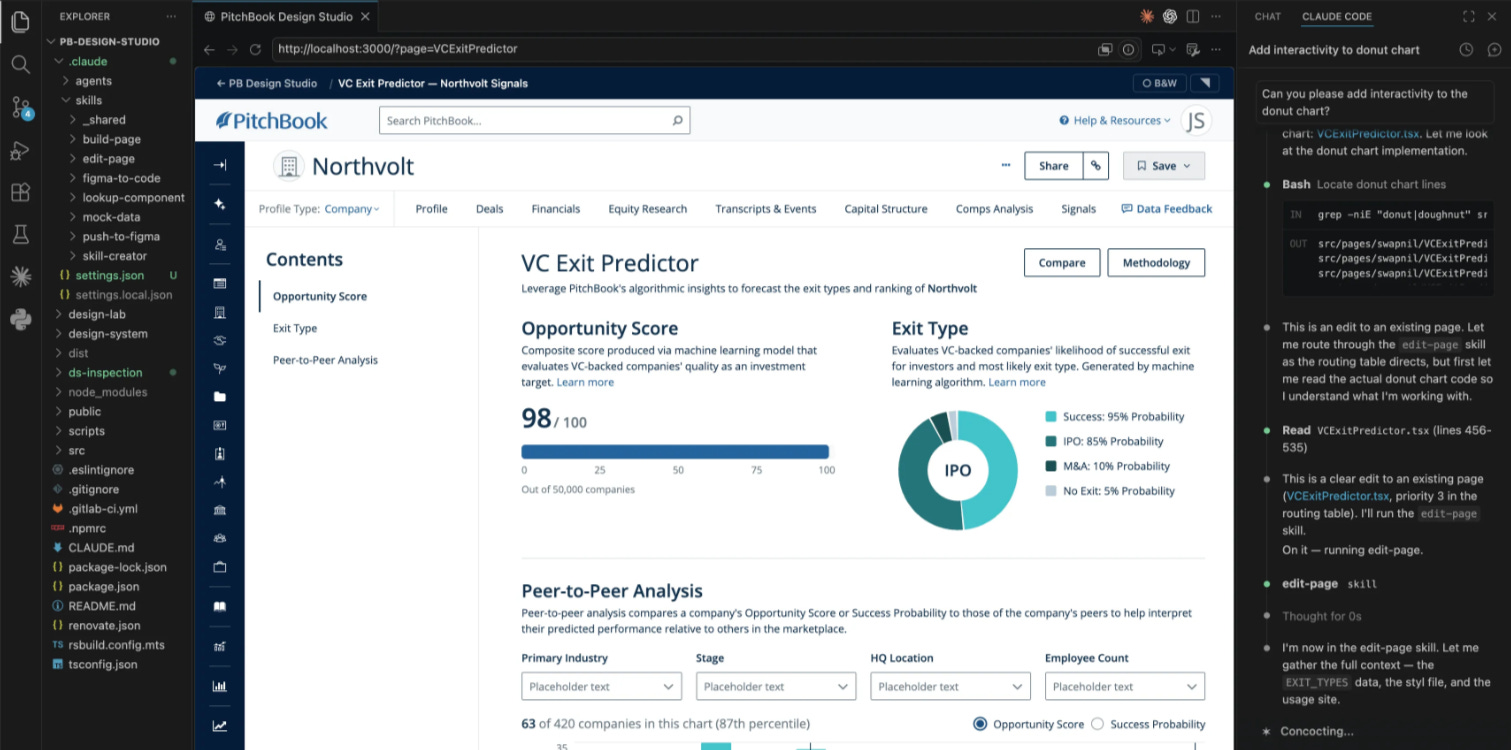
AI App Builders Can Build Apps. Teaching One to Build Ours Was the Real Work. by Swapnil Shinde
Why We Like It:An unusually candid case study of building an internal AI prototyping tool, showing exactly where generic AI builders fail against a real enterprise design system.
Pro Tip:This is a masterclass in context engineering: routing tables, Figma Code Connect, private registry authentication, and branch protection rules, all built to stop an agent hallucinating your Button API. The honest “what didn’t work” section makes it more useful than most AI case studies.
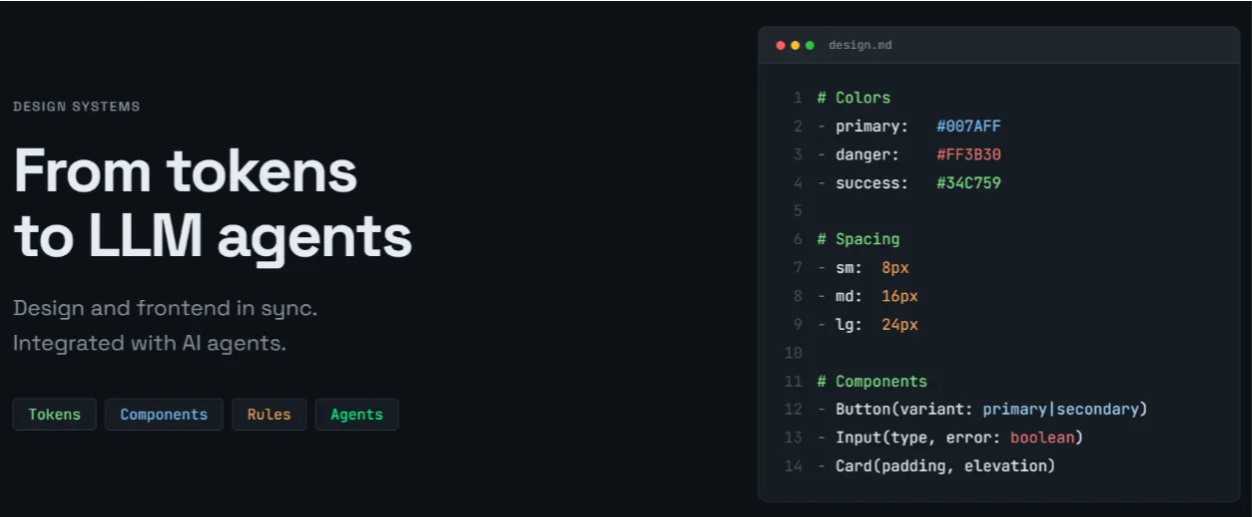
Design Systems for LLM Agents: Two Files That Fix Everything by Kirill Shlemen
Why We Like It:A refreshingly simple, immediately actionable fix for AI agents generating inconsistent UI: two markdown files that spell out what exists and how to use it.
Pro Tip:Copy the design.md and claude.md templates in this piece and you have a working starting point for briefing any coding agent on your design system within the hour. It is one of the clearest explanations around of why agents “hallucinate” UI and how to stop them.
📰 Published in the Last Week
To stay updated on the latest articles, we share every new article on our LinkedIn page.
AI Agents and Design Systems
👉 Design Systems for LLM Agents: Two Files That Fix Everything by Kirill Shlemen
👉 Design Systems for LLM Agents, Part 2: Why Storybook Is the Missing Layer by Kirill Shlemen
👉 AI to Agentic to Autonomous to You by Surendar Selvaraj
👉 Design Systems, Experience Platforms, and AI Are One Conversation. Here Is Why. by Eddie Lou
AI Tools and Workflows
👉 Figma Agent Review: Real-World Testing, Prompts and Results by Ben Ellis
👉 AI App Builders Can Build Apps. Teaching One to Build Ours Was the Real Work. by Swapnil Shinde
👉 A good approach to organize Figma Libraries for Design Systems and AI workflows. by Elsa Canto
👉 We Fixed This Exact Mess 20 Years Ago. AI Design Should Steal the Playbook. by Abhi Chatterjee
Tokens and Color
👉 OKLCH from a UI Designer’s Perspective: Moving Beyond Intuition in Color Design by Wakana Asai
👉 The Token Structure That Survives Five Products (Google Uses It Too) by Surendar Selvaraj
👉 What Developers Misunderstand About Figma Tokens by Akshay
Component Architecture
👉 Motion Is Becoming Part of the Design System by Wakana Asai
👉 Headless Design System by edawn
👉 Designing for Every Screen: Mobile, Dark Mode, and System-Level UX for a PWA Mind Mapper by Kornel Maráz
👉 Framework-Matched Design Systems: The Biggest Shift in DS Thinking for 2026 by Madhesh P
Governance and Strategy
👉 Why Your Design System Will Die (And It’s Not a Technical Problem) by Cédric
👉 Lessons From the Greats: How Top Design Systems Actually Scale and Deliver by Pir Ahmed
👉 Code Layers Are Coming. Your Design System Contribution Model Isn’t Ready. by Madhesh P
👉 The Design File Is No Longer the Source of Truth by Surendar Selvaraj
👉 Building a Design System for a Live Product: The Challenges Nobody Talks About by Ritika Dhingra
Perspective and Opinion
👉 A Day in 2045 Using Apps That Don’t Exist Yet by Shaista Aben e Azar
👉 Why the Human Brain Craves Boxes: The Cognitive Science of Grid UI by Appibara LTD
👉 Senior Designers Don’t Design More Screens. They Solve Bigger Problems. by rakesh patel
🎙️ From the Conference Floor
Learn how designers at WhatsApp, Atlassian, Figma and others use AI in their daily workflows.
Cristian Morales’ talk at Into Design Systems 2026 built a complete infrastructure for agentic design systems and made the case that governance doesn’t have to be a manual fight. It just has to be encoded.
Yesenia Perez-Cruz introduced a framework that’s shifted how I think about where design systems are headed. Her argument: we’ve spent years teaching AI to choose the right component. What we should be doing is giving it enough context to reason about intent.
As a Design Systems Collective reader, you get 10% off. Use code DSCOLLECTIVE at checkout. Get the recordings here
🎗️ Support us:
If you find our content helpful, here’s how you can support us:
Forward this email to a friend and invite them to subscribe
Support our writers by visiting the Design Systems Collective website
📝 Closing Thoughts
The practitioners I trust most this year aren't the ones with a tidy before-and-after story about their AI rollout. They're the ones willing to publish the part where the agent got it wrong first, and what that revealed about how little they'd actually written down. That is worth more than another success story.
Founding Editor, Design Systems Collective