

Your System Has a New Consumer. It Has No Patience for Ambiguity.
Issue #57

Design systems have always had multiple consumers. That was the point. A single source of truth that serves designers, engineers, product teams, and anyone else who needs to build with consistency at scale.
But the consumer list just got more demanding. AI systems do not browse a Figma file and fill in the gaps with good judgement. They need structure that is explicit, metadata that is meaningful, and documentation that a machine can actually reason about. Every assumption you left undocumented is now a liability.
That pressure is clarifying something the best teams are already acting on. The role of a design system is shifting from shared language to enforceable contract. From guidelines with good intentions to guarantees with real consequences. And the systems that cannot make that shift are drifting, quietly, in ways that are difficult to detect until the cost becomes obvious.
The question worth sitting with is not whether your system is ready for AI. It is whether it was ever as rigorous as you assumed.
In this issue
📚 Featured Articles
📰 Published in the Last Week
🎗️Support us
📝 Closing Thoughts
📚 Featured Articles
Must-read articles at www.designsystemscollective.com.
💡 Have an article to share? Submit it here!
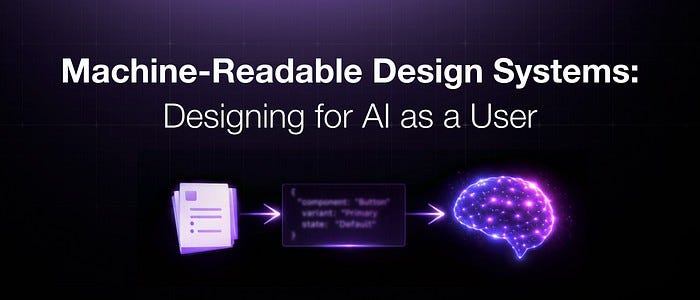
Machine-Readable Design Systems: Designing for AI as a User by Diana Wolosin
Why We Like It: A clear, evidence-led account of what design systems must become when AI is a first‑class consumer of system knowledge. It connects experiments with MCP to practical consequences for token, component and documentation structure.
Don’t Miss: This piece distils experiments and learnings from making a design system machine readable: it explains how metadata and MCP benchmarks change AI behaviour, why prose fails machines, and what a reliable AIX (AI experience) looks like. Essential reading if you are preparing your system for automated generation, audits or CI integration.

Your Design System Isn’t Isolated — And That’s Why It Will Break by George William Amalan
Why We Like It: A hands‑on architecture playbook for building decoupled, versioned UI platforms with concrete code, build and release examples. It turns the abstract problem of coupling into an actionable engineering roadmap.
Pro Tip: Follow this article for a practical guide to Isolated Design Systems: it covers token pipelines, Web Components with Lit, Vite/Rollup packaging, CI automation and visual regression testing. If you are responsible for moving a system from a shared folder to a production‑grade UI platform, this is a solid reference you can apply immediately.

Design Drift Prevention: AI Agents That Guard Your System by Madhesh P
Why We Like It: A timely framework for embedding AI agents in CI/CD to detect and prevent slow, silent divergence from the source of truth. It maps practical integrations to governance outcomes.
Don’t Miss: The article explains how autonomous governance agents work, what they can detect (token misuse, component deviations, accessibility regressions), and how to integrate them into pull request workflows without crushing creativity. Useful KPIs and governance patterns make this a strong primer for engineering and system leads exploring automated drift prevention.
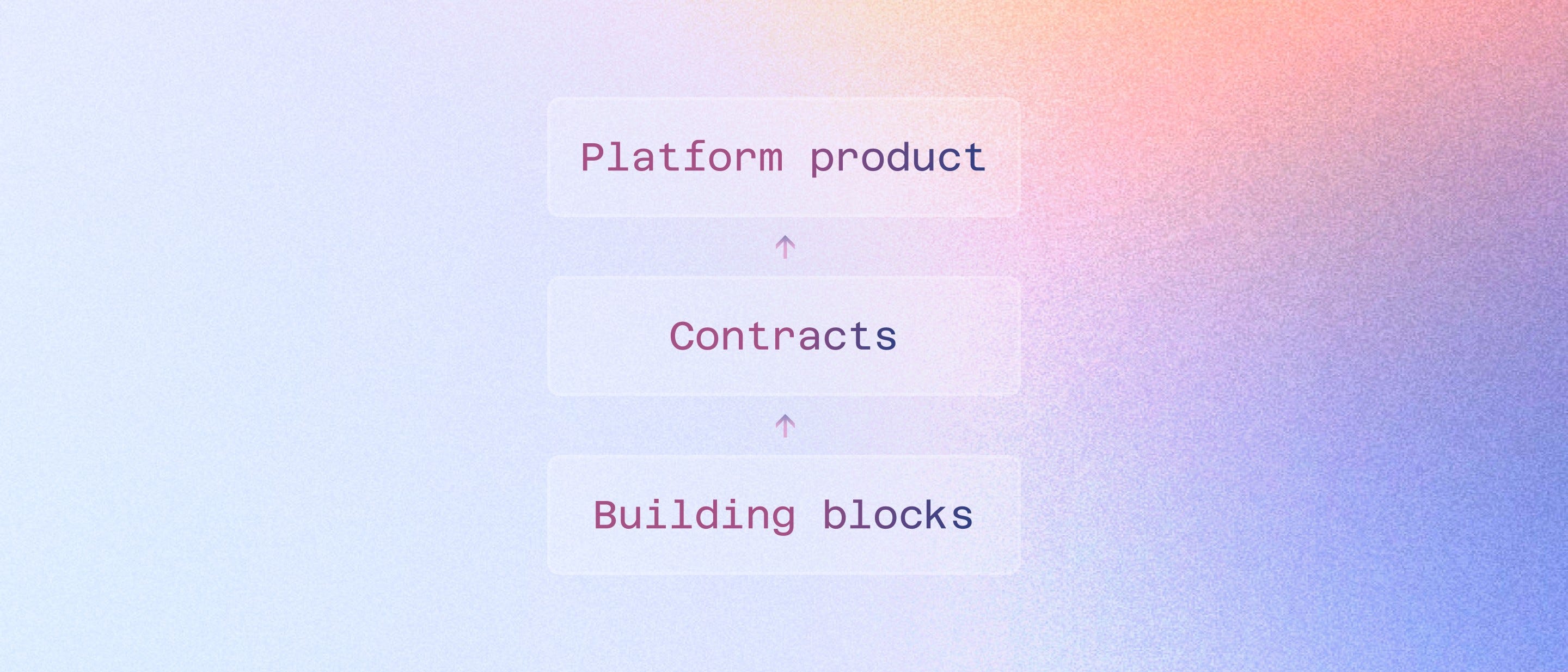
What does it take to be a Design System Designer in the AI era? by Grace Han
Why We Like It: Sharp role definition and a practical skills ladder for system designers facing AI consumption and automation. It reframes the job from visual curation to contract design and enforcement.
Perfect For: Leaders and individual practitioners rethinking hiring, upskilling and governance in 2026: the article outlines practitioner, architect and infrastructure steward levels and lists concrete practices like token contracts, linting and enforcement pipelines that organisations must fund. A strategic must‑read for teams planning for AI‑driven production.
📰 Published in the Last Week
To stay updated on the latest articles, we share every new article on our LinkedIn page.
👉 Scaling Design Systems: From Startup to Enterprise by Madhesh P
👉 Your Design System Isn’t Isolated — And That’s Why It Will Break by George William Amalan
👉 Definig a pilot for your Design Systems by Andresaristizabal
👉 What does it take to be a Design System Designer in the AI era? by Grace Han
👉 You’re Automating the Wrong 70% by Phillip Lovelace
👉 The Live Figma Test by Brady Starr
👉 The Value of Design Systems Across Product Maturity by Teresa Alaniz
👉 How I Designed a Scalable Light and Dark Theme Architecture in React Native by Abdul Basit
👉 Design Drift Prevention: AI Agents That Guard Your System by Madhesh P
👉 A Shared Vocabulary Is Not a Nice-to-Have. It Is Design Systems Infrastructure. by Damini Patil
👉 Machine-Readable Design Systems: Designing for AI as a User by Diana Wolosin
👉 Building a Scalable Product System as a Solo Designer — With AI Agents by Kermit Yen
🎗️ Support us:
If you find our content helpful, here’s how you can support us:
Forward this email to a friend and invite them to subscribe
Support our writers by visiting the Design Systems Collective website
📝 Closing Thoughts
There is a version of this conversation that gets stuck on tooling. Which AI, which agent, which pipeline. That version misses the point.
What the most interesting practitioners are arriving at is simpler and harder: the foundations matter more than ever precisely because the consumers of those foundations are changing. A human designer will tolerate ambiguity. An AI system will not. It will make something up, or fail silently, or drift in ways nobody notices until the damage is done.
That is not a reason for anxiety. It is a reason for rigour.
The distinction between a system built on guidelines and one built on guarantees sounds subtle. In practice, it changes everything.
Shane P Williams
Founding Editor, Design Systems Collective